Gold IRA fee comparison worksheet
Download a free worksheet for comparing Gold IRA companies on application, custodian, storage, markup, and buyback fees. Snapshot-dated industry baseline included.
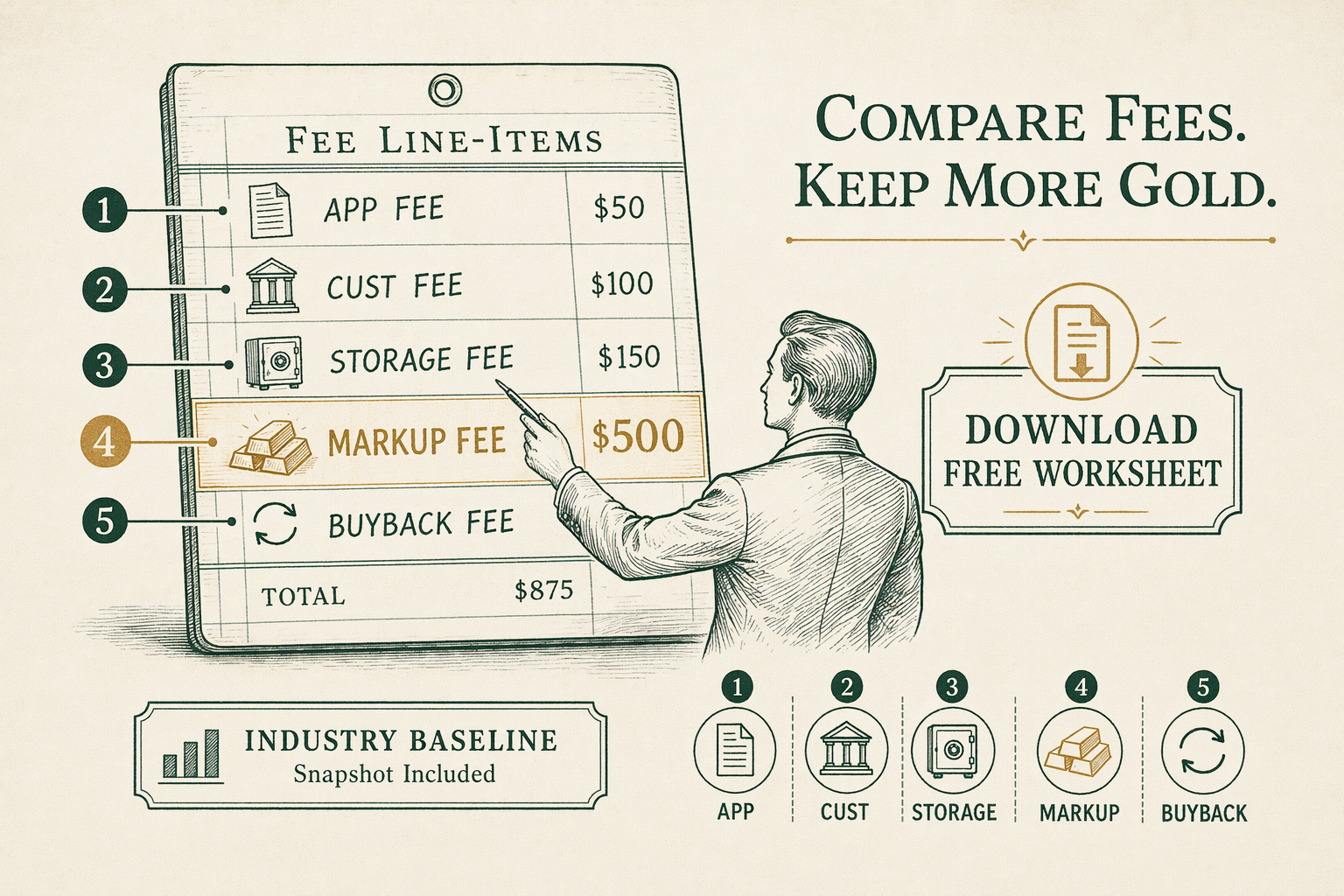
What the worksheet contains
The worksheet is an XLSX file with three sheets. Sheet one is the comparison template — a structured table covering the ten fee categories every Gold IRA buyer should compare, with three columns for competing-company quotes plus a fourth column showing the 2026-Q2 industry baseline range.
The ten fee categories tracked: application/setup fee, transfer-in fee, annual custodian fee (flat or percentage), annual storage fee (segregated allocated and commingled allocated), markup over the LBMA Gold Price spot fix on initial purchase (bullion-grade and any specialty issues), buyback policy and spread, closing/distribution fee, per-wire transaction fee, in-kind distribution fee from the depository, and the effective-date of the fee schedule (the snapshot date the company is quoting).
Sheet two is the calculation sheet — a structured arithmetic that takes the inputs from sheet one and computes the year-one all-in cost, the year-three and year-five cumulative costs, and the implicit total-cost-of-ownership percentage against the rollover amount. The calculations are spelled out cell-by-cell so any reader can verify the arithmetic against their own assumptions.
Sheet three is the question checklist — a 10-question list to put to a custodian or Gold IRA marketing company in writing before signing. The checklist is the same one in the /guides/gold-ira-fees-explained/ topic-hub guide, reformatted for use as a side-by-side prompt sheet.
Total worksheet size: approximately 3 sheets, 400 cells of structured content. Opens cleanly in Excel, Google Sheets, Apple Numbers, and LibreOffice Calc.
How to use it with three competing quotes
Step one: request written fee schedules from three Gold IRA companies. The /guides/gold-ira-fees-explained/ guide includes the specific written-request language. A reputable company will produce a dated Fee Disclosure document showing all ten categories. A company that declines to produce the document in writing is itself providing useful information about the comparison.
Step two: enter the three companies' numbers into the comparison columns on sheet one of the worksheet. Use the same units (dollars and percentages) and the same units across all three quotes so the comparison is apples-to-apples.
Step three: review sheet two of the worksheet for the year-one, year-three, and year-five all-in cumulative cost calculations. The largest single delta between companies typically comes from the markup-over-spot line — frequently `5%` to `15%` of the rollover amount, which translates to dollar-level differences in the thousands on a six-figure rollover.
Step four: review the checklist on sheet three against the documents each company provided. Note any line item where a company declined to put the number in writing or provided ambiguous numbers; that note is itself a data point in the comparison.
Step five: cross-reference the chosen company against the editorial reviews at /reviews/gold-ira-companies/ before signing. The editorial reviews cover the BBB record, the custodian relationships, and the corporate-history factors that the fee comparison alone does not capture.
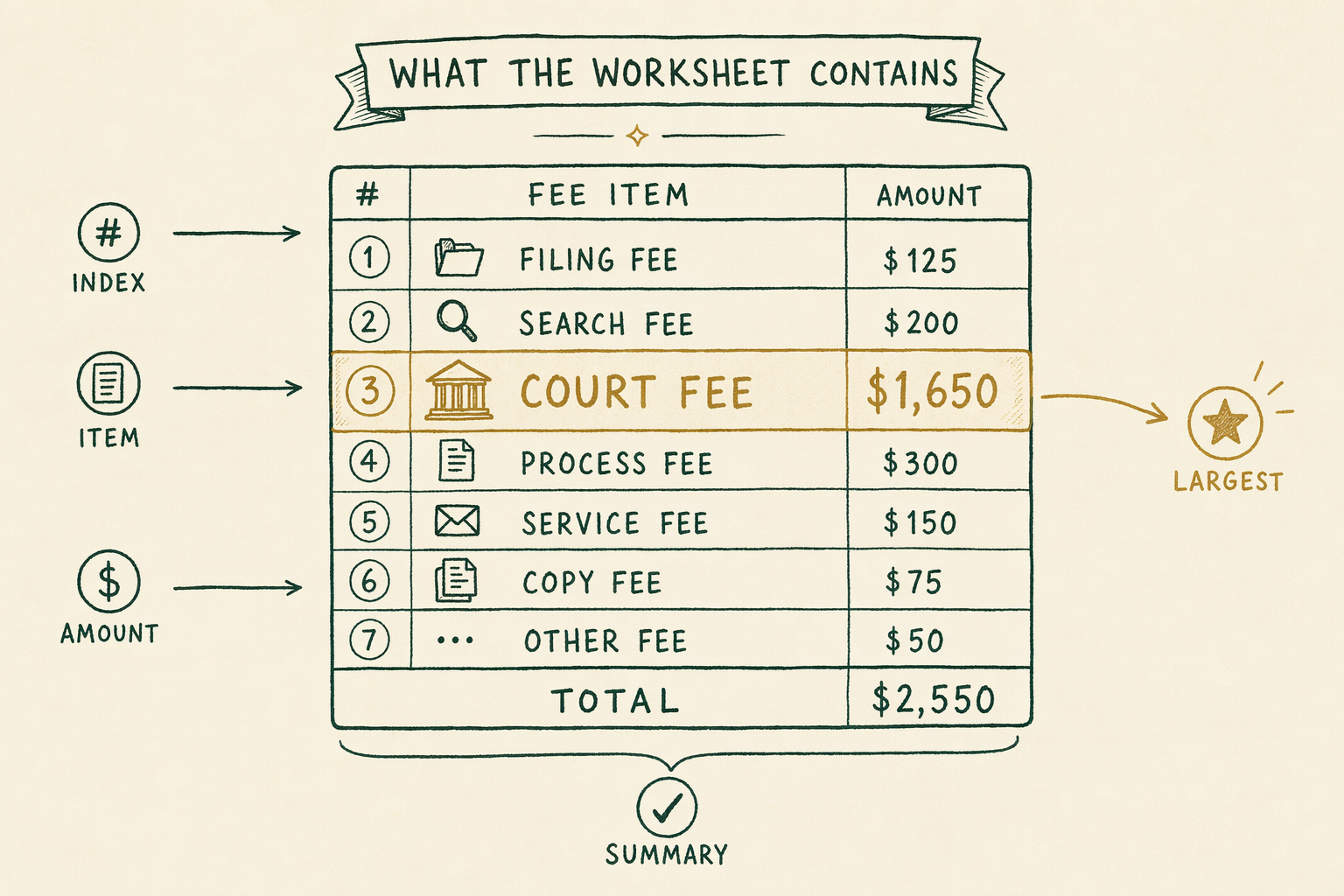
The industry baseline reference column
Column five of sheet one is the 2026-Q2 industry baseline — a reference range for each fee category drawn from cross-referencing custodian published Fee Disclosures, depository published storage-fee schedules, and BBB-filed dispute records. The range gives a sense of where 'typical' sits and where 'high' or 'low' sits for each line item.
The baseline is a reference, not a target. A specific company's quote being above the baseline range on a specific line item is not by itself disqualifying; the question is whether the company's all-in package is competitive given its other features (custodian quality, storage-partner choice, service profile). The baseline is the comparison anchor, not the bid-to-beat.
The baseline is updated quarterly. Each refresh re-pulls the underlying custodian and depository published documents and updates any ranges that have shifted. The 'last refreshed' date is in the worksheet header.
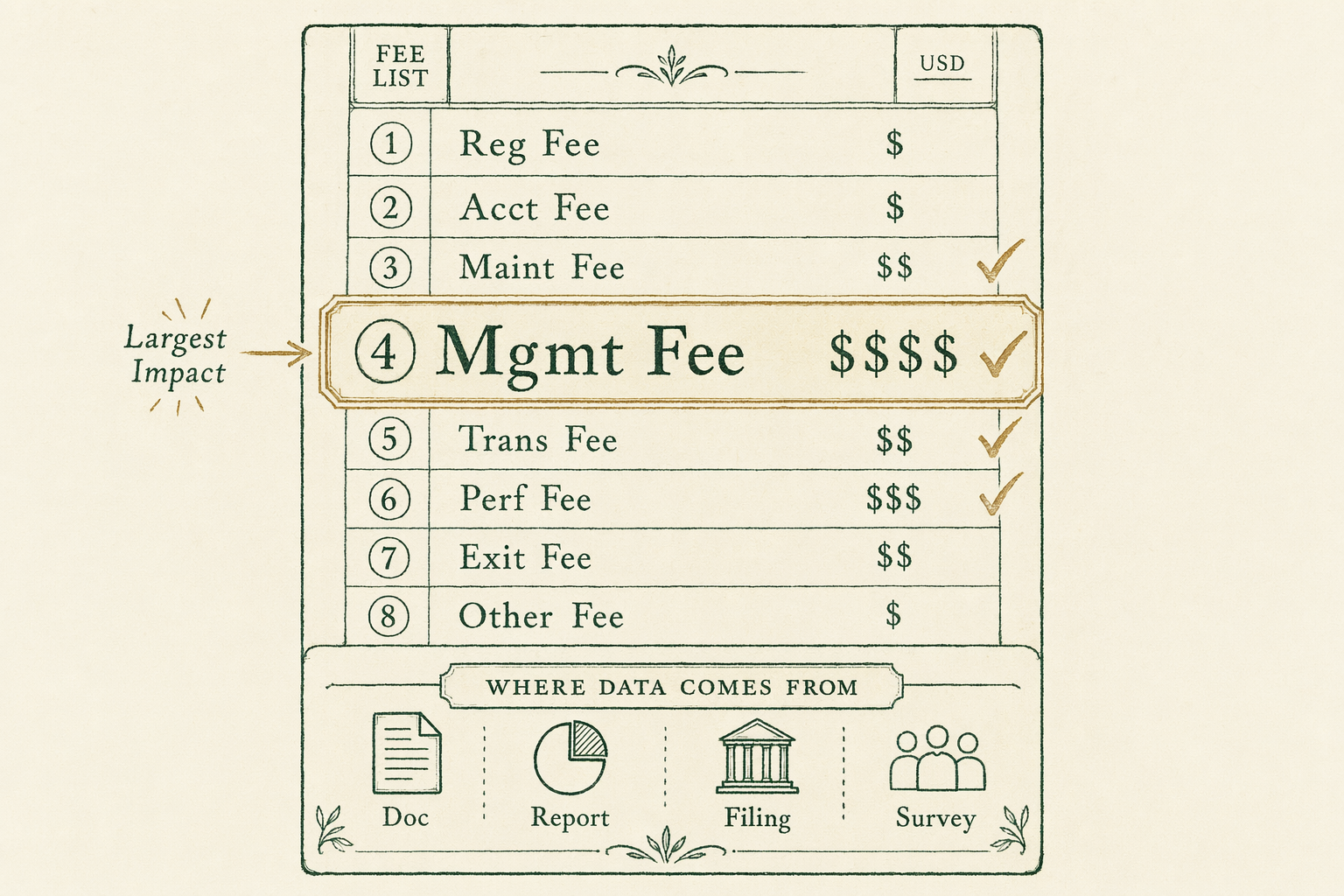
Where the data comes from
The 2026-Q2 industry-baseline ranges were compiled from: (1) the published Fee Disclosure documents of major self-directed IRA custodians (Equity Trust Company, Strata Trust Company, GoldStar Trust Company, Kingdom Trust Company), retrieved from each custodian's regulatory disclosure pages; (2) the published storage-fee schedules of major IRS-approved depositories (Delaware Depository Service Company, Brink's Global Services USA, International Depository Services), retrieved from each depository's institutional-client disclosure; (3) sample published marketing materials from major Gold IRA companies; (4) BBB-filed complaint records where markup-percentage detail was disclosed; and (5) the parallel direct-to-consumer bullion-dealer retail markup for comparable products.
Sources are cited in the worksheet header. The methodology is transparent — every range in the baseline column has a sourced justification in the references sheet at the bottom of the worksheet.
We do not name any specific company in the worksheet as best or worst. The /reviews/gold-ira-companies/ hub covers the named-company editorial comparisons. The worksheet is the structured-comparison tool for the buyer to use against any three companies of their choosing.
Gold IRA fee comparison worksheet
Frequently asked questions
-
Who is this worksheet for?
Anyone evaluating two or more Gold IRA companies and wanting an apples-to-apples comparison of total first-year and ongoing costs. -
Is the industry baseline updated?
Quarterly minimum. The worksheet carries a 'last reviewed' date. Fees and arrangements change — verify with each company directly. -
How do I use this tool?
Open the downloaded file, fill in the fields specific to your situation, and use the result as input to a conversation with a custodian or adviser. The tool surfaces the right questions; it does not generate personalized advice. -
Can I share the download?
Yes, with attribution to bullionlens.com. The methodology and citations inside the document are what give it weight; remove either and downstream readers lose the source-of-truth trail.
In plain English Drop your email and the brief lands in your inbox. We never sell your address.