APMEX vs Kitco
Side-by-side editorial comparison of APMEX (US-based) and Kitco (Canada-based) on shipping origin, spreads, payment methods, and cross-border considerations for US buyers.
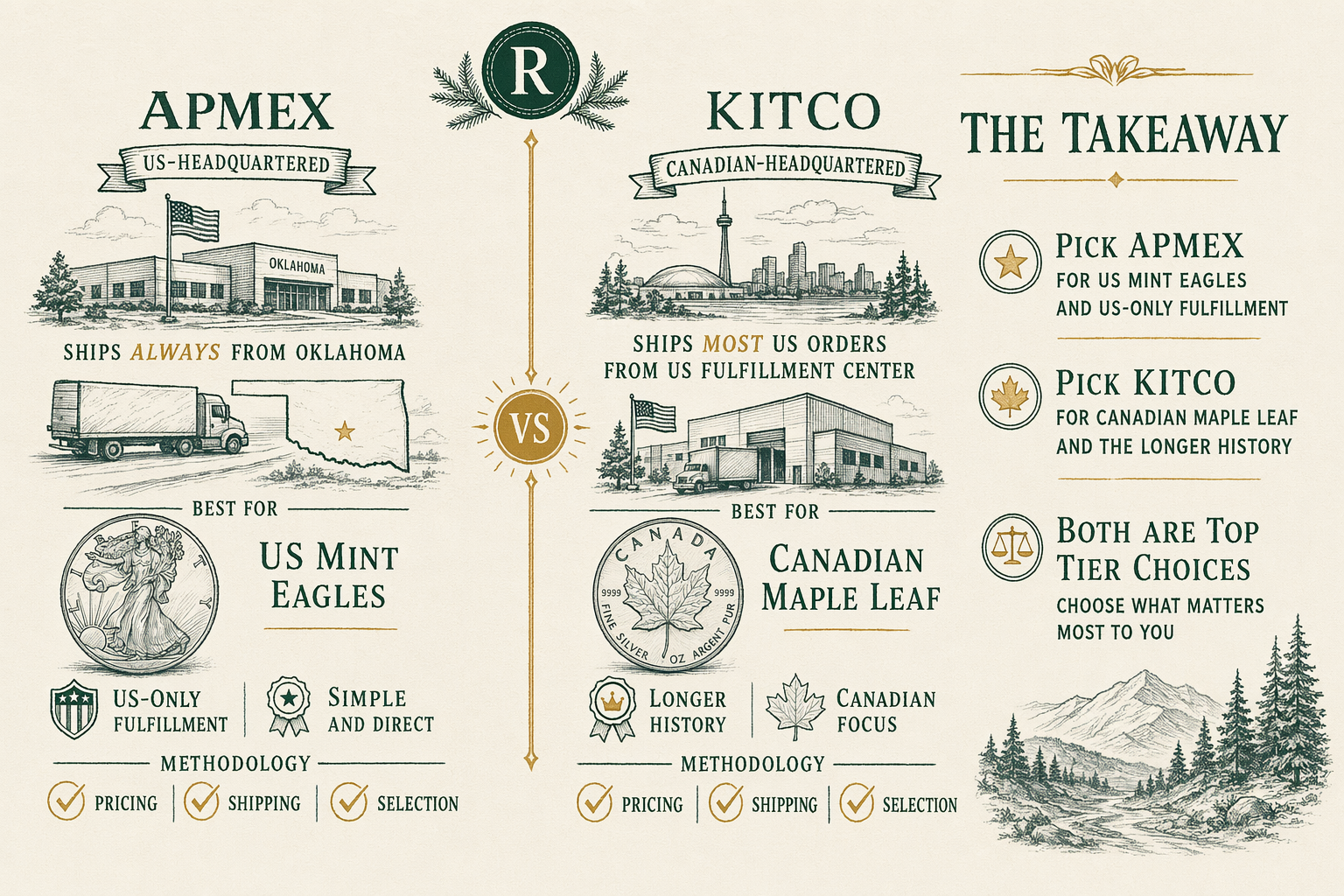
Methodology and disclosure
**Editorial disclosure.** BullionLens earns a commission when a reader opens an account or places an order through links on this page. This does not change the price either dealer quotes you. Editorial selection is independent — see [our editorial standards](/editorial-standards/). Reviewed `2026-Q2`.
APMEX and Kitco are two of the most-recognized names in North American bullion dealing. The structural difference between them is geography: APMEX is US-based and ships from Oklahoma; Kitco is Canada-based and ships from Montreal, with a US fulfillment operation for US-bound orders. For US buyers, the geographic difference produces real operational consequences — shipping logistics, US tax-reporting treatment, customs handling on cross-border-fulfilled orders — that this comparison page treats as the central question.
We compare seven objective criteria: founded year, headquarters, shipping origin and logistics, spread snapshot on `1 oz` American Gold Eagle, payment methods and surcharges, US tax-reporting treatment, and Better Business Bureau record. Figures are paraphrased from each dealer's public materials current as of `2026-Q2`. Pages are rebuilt every `90` days under the quarterly review schedule. The audience for this page is specifically the US-based buyer; the comparison is less relevant for Canadian buyers, who face different considerations.
Corporate backgrounds and headquarters
**APMEX** (American Precious Metals Exchange) was founded in `2000` and is headquartered in Oklahoma City, Oklahoma. The company is one of the oldest online bullion dealers in the United States and has operated through the full bullion cycle since the early `2000s`. APMEX's transaction volume is among the highest in the US online bullion segment. APMEX has remained privately held throughout its operating history.
**Kitco Metals Inc.** was founded in `1977` and is headquartered in Montreal, Quebec, Canada. Kitco is one of the oldest precious-metals dealers in North America by any measure, with operations stretching from a brick-and-mortar retail location in Montreal to an early presence on the consumer internet (Kitco.com is one of the longest-running precious-metals websites on the internet, with continuous publication since the late `1990s`). Kitco's market-data and news divisions are widely cited by industry press, which has produced a brand-recognition position that exceeds the company's relative US-market transaction volume.
The headquarters difference matters operationally. APMEX is subject to US securities, consumer-protection, and tax-reporting laws as a US-headquartered company. Kitco is Canadian-headquartered and is subject to Canadian regulations primarily, with US-facing operations subject to US tax-reporting and customer-protection rules at the point of sale. The age difference (Kitco at `49` years versus APMEX at `26`) is large but does not by itself differentiate the two for US-buyer purposes — both have multi-decade operating records.

US-based vs Canada-based shipping
**APMEX** ships all US orders from its Oklahoma warehouse. Standard delivery is `1`-`5` business days depending on shipping method, with USPS Registered Mail, UPS, and FedEx all available with declared-value insurance and signature-required delivery. Free shipping kicks in at `$199` per order on most categories. No customs declarations or import-duty considerations apply because the shipment never crosses an international border.
**Kitco** operates a US-fulfillment center in addition to its Montreal headquarters. For US-bound orders, Kitco's standard practice is to ship from the US fulfillment center where inventory is available, which means the buyer typically does not deal with customs paperwork or import duties on US-routed shipments. For products that Kitco fulfills from Montreal — which can happen with certain specialty or numismatic items — the order ships internationally and may incur customs declarations and US import duties at the buyer's expense. Kitco's order-confirmation messaging discloses the fulfillment origin; read it before signing for delivery.
Net read: for US buyers ordering common bullion-grade products (US Mint Eagles, common refiner bars), both APMEX and Kitco effectively ship from US warehouses. For specialty or numismatic items, Kitco may fulfill from Montreal with international shipping consequences; APMEX always fulfills from Oklahoma. The shipping difference is product-dependent, not always-on.
Spread snapshot
Snapshot as of `2026-Q2` on a representative trading day. Spreads move daily; compare live quotes at order time.
**APMEX** on `1 oz` American Gold Eagle quoted approximately `2.5%`-`4.0%` over spot on the ask side and approximately `0.5%`-`1.5%` under spot on the bid side, for a published spread of approximately `3.0%`-`5.5%`. Volume-tier pricing applies above `10 oz` and `100 oz`.
**Kitco** on `1 oz` American Gold Eagle quoted approximately `2.5%`-`4.5%` over spot on the ask side and approximately `0.5%`-`2.0%` under spot on the bid side, for a published spread of approximately `3.0%`-`6.5%`. Volume-tier pricing applies; Kitco's Canadian Maple Leaf coin (the company's home-mint product) often quotes at a tighter spread than its American Gold Eagle inventory, reflecting Kitco's supplier relationships with the Royal Canadian Mint.
Net read: on `1 oz` American Gold Eagle, APMEX is competitive to slightly tighter than Kitco on the snapshot reviewed. Kitco is often tighter than APMEX on `1 oz` Canadian Gold Maple Leaf — a buyer who specifically wants Maple Leaf coins may find Kitco's spread better. The spread comparison is product-specific; do not assume one dealer is always tighter.
Payment methods
Both dealers operate the standard online-bullion payment-method menu for US buyers: bank wire and ACH at the published headline price; credit card and PayPal at a published surcharge; personal check at the headline price with a hold period.
**APMEX** surcharges credit card and PayPal at approximately `3.0%`-`4.0%`. Cryptocurrency payment is accepted through approved processors. APMEX offers a co-branded financing product on qualifying orders.
**Kitco** surcharges credit card and PayPal at approximately `4.0%`. Bank wire is the preferred high-volume payment method, with quoted wire instructions provided at order confirmation. Cryptocurrency payment availability has shifted over time; check the current order-entry page for the latest surcharge and processor list.
Net read: payment-method economics are within `100 bps` of each other for credit-card orders. For bank-wire orders, the two dealers are effectively identical on payment-method cost. The decision does not turn on this section.
Tax reporting considerations
US tax-reporting treatment is the same for both dealers from the buyer's perspective. Bullion sales to retail buyers do not trigger Form `1099-B` reporting from the dealer on most product categories at most volumes — `1099-B` reporting from the dealer applies on specific reportable products at specific reporting thresholds, summarized in IRS Form `1099-B` instructions and in CFTC and US Customs reporting schedules. The most common reportable products are pre-`1965` US 90% silver bags above certain face-value thresholds and specific large-bar formats; common `1 oz` Gold Eagles and `1 oz` Silver Eagles do not trigger dealer `1099-B` reporting at retail volumes.
The buyer's responsibility, regardless of dealer, is to report any capital gain or loss on the eventual sale on Schedule D of Form `1040`. Long-term capital gains on physical gold and silver held more than one year are taxed at the IRS 'collectibles' rate, capped at `28%` (currently). Short-term gains are taxed as ordinary income at the holder's marginal rate. Consult a tax adviser; we are not providing tax advice on this page.
Kitco's Canadian headquarters does not change US tax-reporting consequences for a US buyer purchasing from Kitco's US fulfillment center. The dealer's tax-reporting thresholds and the buyer's capital-gains reporting follow US rules in both cases. Cross-border-fulfilled orders (when Kitco fulfills from Montreal) introduce US customs valuation and import-duty handling, which is a separate consideration from federal income-tax reporting.
BBB and consumer-affairs records
Both APMEX and Kitco carry favorable consumer-protection records as of `2026-Q2`.
**APMEX** holds a `BBB A+` rating with accreditation. The complaint history is low in absolute count relative to the company's stated transaction volume; complaints are typically resolved through the BBB mediation process. There is no state attorney general enforcement action, SEC civil action, or SEC settlement on the public record as of `2026-Q2`.
**Kitco** holds a favorable consumer-protection record. Kitco's US operations are subject to US consumer-protection rules at the point of sale. Kitco's Montreal headquarters and `49`-year operating history have produced an extensive press and trade-publication record that is broadly favorable. There is no US state attorney general enforcement action or SEC civil action against Kitco on the public record as of `2026-Q2`. Note that Kitco has dealt with a multi-year Canadian Revenue Agency tax dispute concerning GST/HST treatment of certain transactions, which is a Canadian tax-collection matter and does not impact US-buyer transactions or US-tax consequences.
Both dealers clear the regulatory-floor screen for US buyers. The decision does not turn on the BBB record.
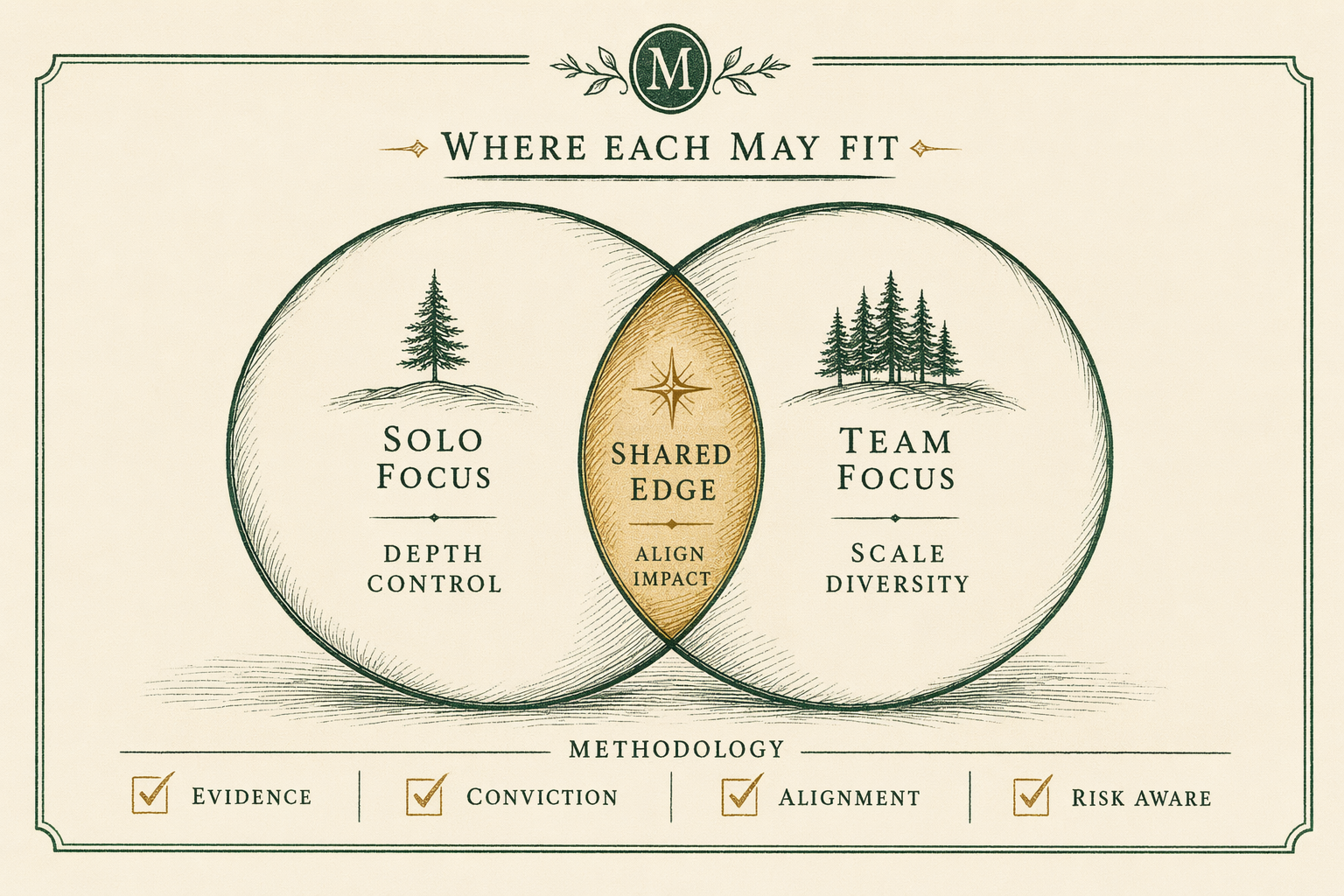
Where each may fit
We do not name a universal best. The comparison resolves on product preference and shipping-origin sensitivity.
**Lean toward APMEX if:** you specifically want a US-headquartered dealer with US-only fulfillment, you primarily buy `1 oz` American Eagle products, you value access to the co-branded financing product on qualifying orders, or you want the longer experience with US consumer-protection oversight.
**Lean toward Kitco if:** you specifically want `1 oz` Canadian Gold Maple Leaf coins (Kitco's spread on Maple Leaf is often tighter than competitors), you value the longer continuous operating history (`49` years versus APMEX's `26`), or you are a regular reader of Kitco's market-data and news publication and value the editorial-supplier relationship.
Both are favorable on consumer-protection records. The shipping difference is product-dependent (cross-border on specialty inventory from Kitco; always-US on standard inventory from both dealers). The tax-reporting treatment is the same for US buyers from both dealers.
_Educational content, not personalized investment advice. BullionLens is not a registered investment adviser. Consult a licensed adviser before making decisions about asset allocation; consult a tax adviser regarding sales reporting and capital-gains treatment._
Want to talk this through? Book a 30-min research call →
Frequently asked questions
-
Are there cross-border issues with Kitco for US buyers?
Kitco operates US-facing retail services. For US buyers, shipping origin (US warehouse vs Canadian) affects timing; tax reporting follows US rules regardless of dealer origin. Confirm logistics before ordering. -
Is the comparison data current?
We snapshot fees and arrangements quarterly minimum and stamp each comparison with a 'Last reviewed' date. Companies change fees, custodians, and storage partners — verify with the company directly before opening an account. -
What if my situation doesn't match either company's profile?
The comparison is a starting point, not personalized advice. If neither company fits, see /reviews/gold-ira-companies/ for the full list of companies we cover and /editorial-standards/ for our selection criteria. -
Where can I learn more?
See the linked topic hub for the foundational explainer, the related T3 articles for deeper coverage, and /editorial-standards/ for our methodology.
In plain English We're an editorial desk. Educational only — talk to a licensed adviser before doing anything with retirement assets.