Are private-mint rounds safe to buy?
Private-mint gold and silver rounds: what they are, how they differ from sovereign coins, refiner reputation as the key signal, and resale considerations.
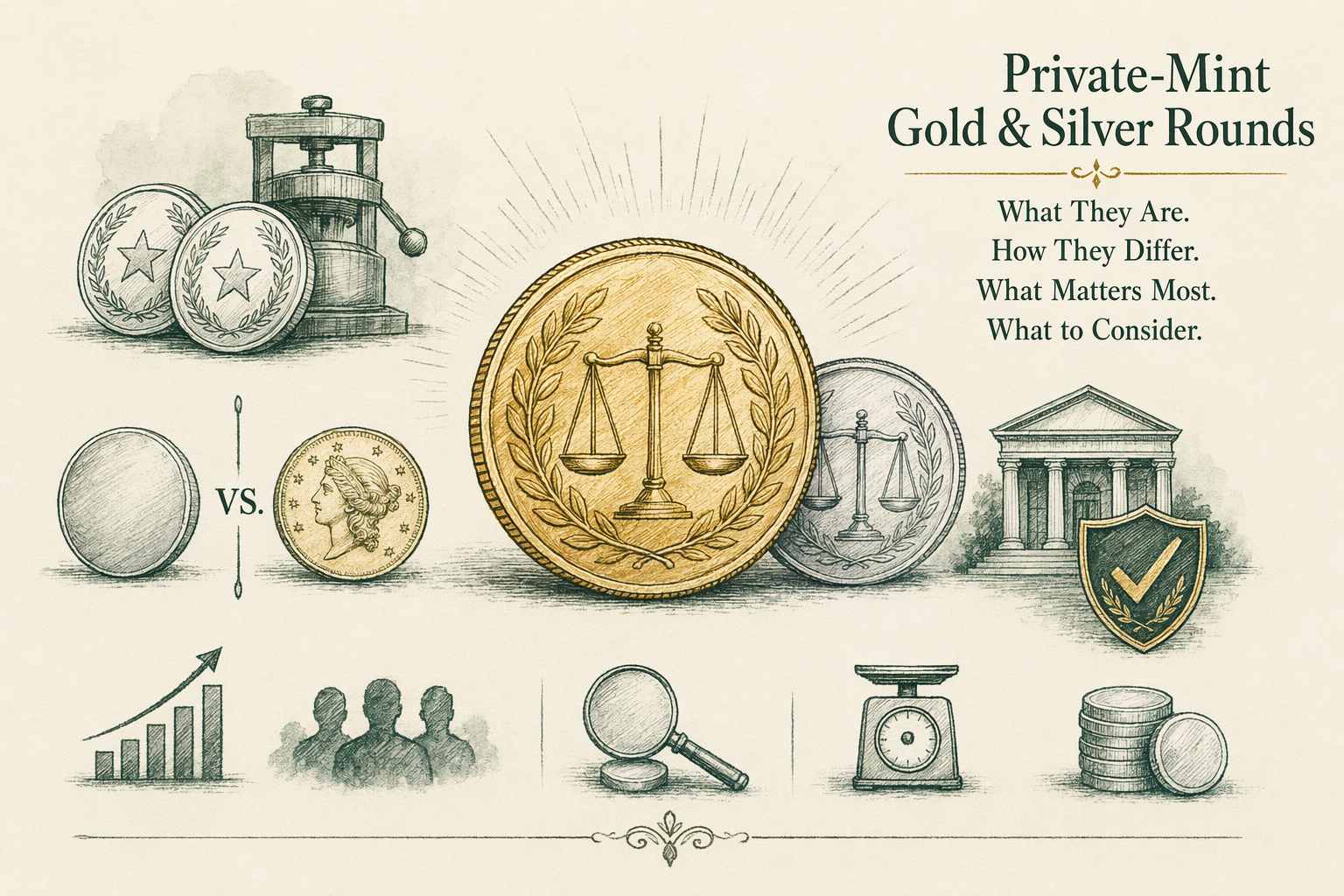
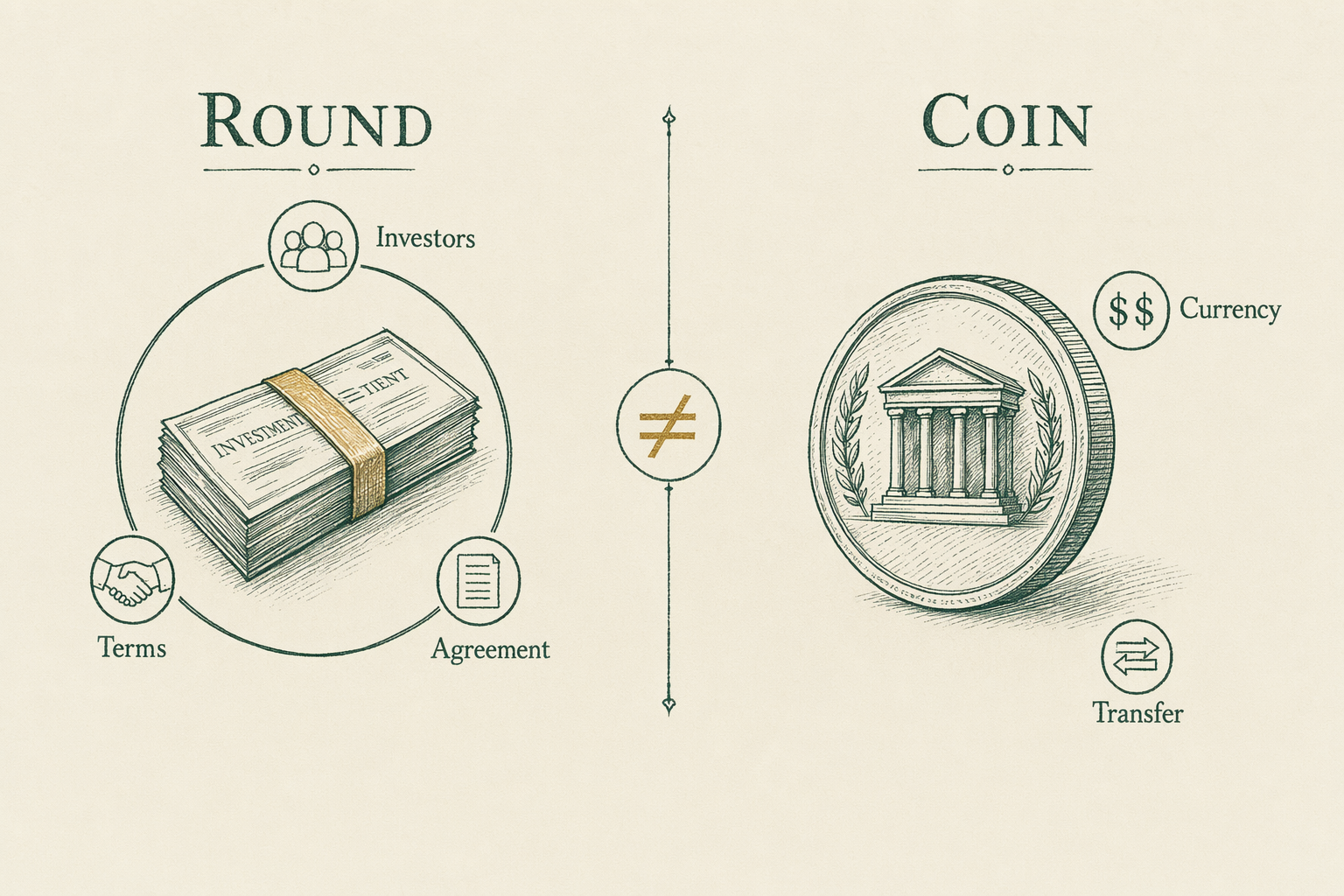
What a 'round' is and how it differs from a coin
A "round" is a privately-minted disc of bullion-grade metal — most commonly `1 oz` of `0.999` fine silver or `0.9999` fine gold — manufactured by a private refiner rather than by a sovereign government mint. Rounds resemble coins in shape and size but have no legal-tender status and no government backing. They trade purely on the metal content.
A "coin," in the strict sense, is minted by a sovereign government mint (US Mint, Royal Canadian Mint, Royal Australian Mint, Royal Mint of the UK, Perth Mint, South African Mint), carries legal-tender denomination (even if nominal — the American Gold Eagle's `$50` face value is a small fraction of its metal value), and has government-backed assurance of metal content. The legal-tender status matters more for symbolic and IRA-eligibility purposes than for the practical metal value.
Operationally, both rounds and sovereign coins serve the same purpose: providing a portable, verifiable, fungible unit of physical metal. The premium difference reflects the brand value of the sovereign mint and the IRA-eligibility status (for those who care). Snapshot as of `2026-Q2`.
Refiner reputation as the key signal
For a sovereign coin, the government mint's backing is the assurance of metal content. For a private-mint round, the refiner's reputation is the equivalent signal — and reputation here means specific, verifiable things: LBMA Good Delivery accreditation for the refiner; participation in COMEX-approved warehouse delivery as an approved producer; documented production history with major bullion dealers as a reliable supplier.
Refiners that hold LBMA Good Delivery status are independently audited on metal-purity processes, audited on the chain of custody from raw material to finished product, and recertified periodically. The LBMA list is the closest equivalent to a quality benchmark for private refiners.
Rounds from refiners NOT on the LBMA list, NOT approved by COMEX, NOT carrying documented production history with major bullion dealers — these are higher-risk in the counterfeit and metal-content sense. The risk is not that the refiner is fraudulent; it is that the buyer's assurance of metal content depends entirely on the dealer's confidence in a refiner whose practices the buyer cannot independently verify.
Recognized private refiners
The historically most-recognized private refiners producing rounds and bars include: **PAMP Suisse** (Swiss, LBMA Good Delivery, widely accepted globally); **Credit Suisse** (now part of UBS; bar production continues under the legacy brand); **Valcambi** (Swiss, LBMA Good Delivery); **Argor-Heraeus** (Swiss/German, LBMA Good Delivery); **Asahi Refining** (US/Canadian, LBMA Good Delivery, formerly Johnson Matthey's North American refining business); **Perth Mint** (Australian, sovereign-backed but also produces what would technically classify as rounds for some products); **Sunshine Minting** (US-based, widely distributed in retail bullion); **Geiger Edelmetalle** (German, smaller production but reputable).
Each of these refiners produces verifiable bullion-grade products that mainstream US dealers (APMEX, JM Bullion, SD Bullion, etc.) regularly stock. The key diagnostic for any round you are considering: is the refiner on the LBMA Good Delivery list and does a major US bullion dealer regularly stock the product.
When rounds are a poor choice
**Inside an IRA**: Most private-mint rounds do NOT qualify as IRA-eligible under IRC § 408(m). The rule limits IRA-eligible bullion to specifically named sovereign coins (American Gold Eagle, American Buffalo, Canadian Maple Leaf, Austrian Philharmonic, Australian Kangaroo, certain others) plus bullion bars meeting `0.995` fineness from approved refiners. A round, even at `0.9999` fineness, fails the coin-specific test of IRC § 408(m) unless it qualifies under the bullion-bar criteria of the same section. Gold IRAs should stick to the named sovereign coins.
**For short-hold trading positions**: The wider resale spread on rounds eats the purchase-premium savings. Sovereign coins are better for positions held less than a few years.
**For gifting or jewelry-like use**: Sovereign coins carry the brand recognition that recipients understand. A private-mint round looks similar but lacks the sovereign-government brand.
**For positions in unfamiliar refiner brands**: If the refiner is not LBMA-accredited and not regularly stocked by major US bullion dealers, the metal-content risk and resale-spread risk both increase. Stay with recognized refiners.
Want to talk this through? Book a 30-min research call →
Frequently asked questions
-
Are private-mint rounds the same as coins?
Legally no. 'Coins' are minted by sovereign governments and carry legal-tender status. 'Rounds' are minted by private refiners and have no legal-tender status — they trade purely on metal content. -
Which private refiners are reputable?
Major refiners with strong reputations include PAMP Suisse, Credit Suisse (now part of UBS), Valcambi, Perth Mint (which produces both sovereign and private products), Asahi Refining, and Royal Canadian Mint refining. Verify any refiner's standing before purchasing. -
Where does BullionLens get its data on this topic?
Primary sources cited in the article. For market data we lean on the LBMA daily fixings, COMEX volume reports, IRS publications, SEC filings, and the World Gold Council's annual reports. We do not cite secondary aggregators as authority. -
When was this page last reviewed?
See the 'Last reviewed' date at the bottom of the page. We commit to a quarterly minimum review cycle; fee schedules, IRS rules, and company arrangements can change between reviews — confirm with primary sources before transacting.
In plain English We're an editorial desk. Educational only — talk to a licensed adviser before doing anything with retirement assets.